
Overview
Architecture
- geomez-core: a pure geometry module with no rendering dependencies. It can be added to any JVM project with no additional overhead.
- geomez-visualization: an optional module that adds .plot() and .addPlotCommands() functions to all core types, delegating rendering to Python via the matplotlib4k bridge.
Geometric Primitives
- Point2D, Vector2D, Direction2D — fundamental elements with floating-point delta-safe equality
- CoordinateSystem2D — coordinate systems represented by 3x3 affine matrices
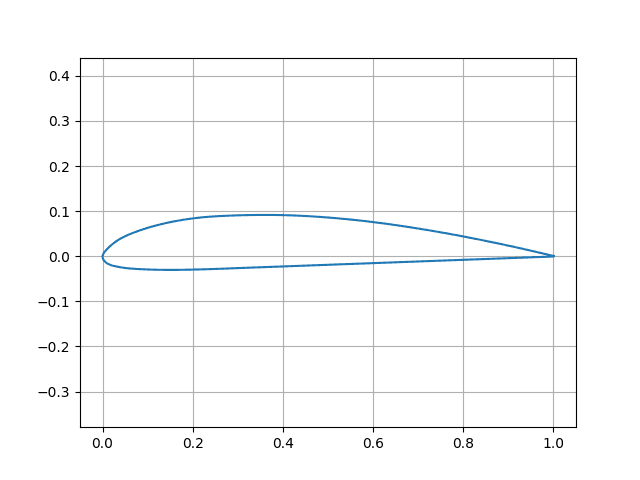
- Polynomial, LinearSpline, CubicSpline — scalar functions with analytical differentiation and integration
- BezierCurve, CubicBezierSpline2D, ParametricCurve2D — flexible parametric curves
- Polygon2D, ConvexPolygon2D — polygons with area computation via the shoelace formula
- Point3D, Vector3D, Direction3D — three-dimensional counterparts of the 2D primitives
- CoordinateSystem3D — 4x4 affine matrices for spatial transformations
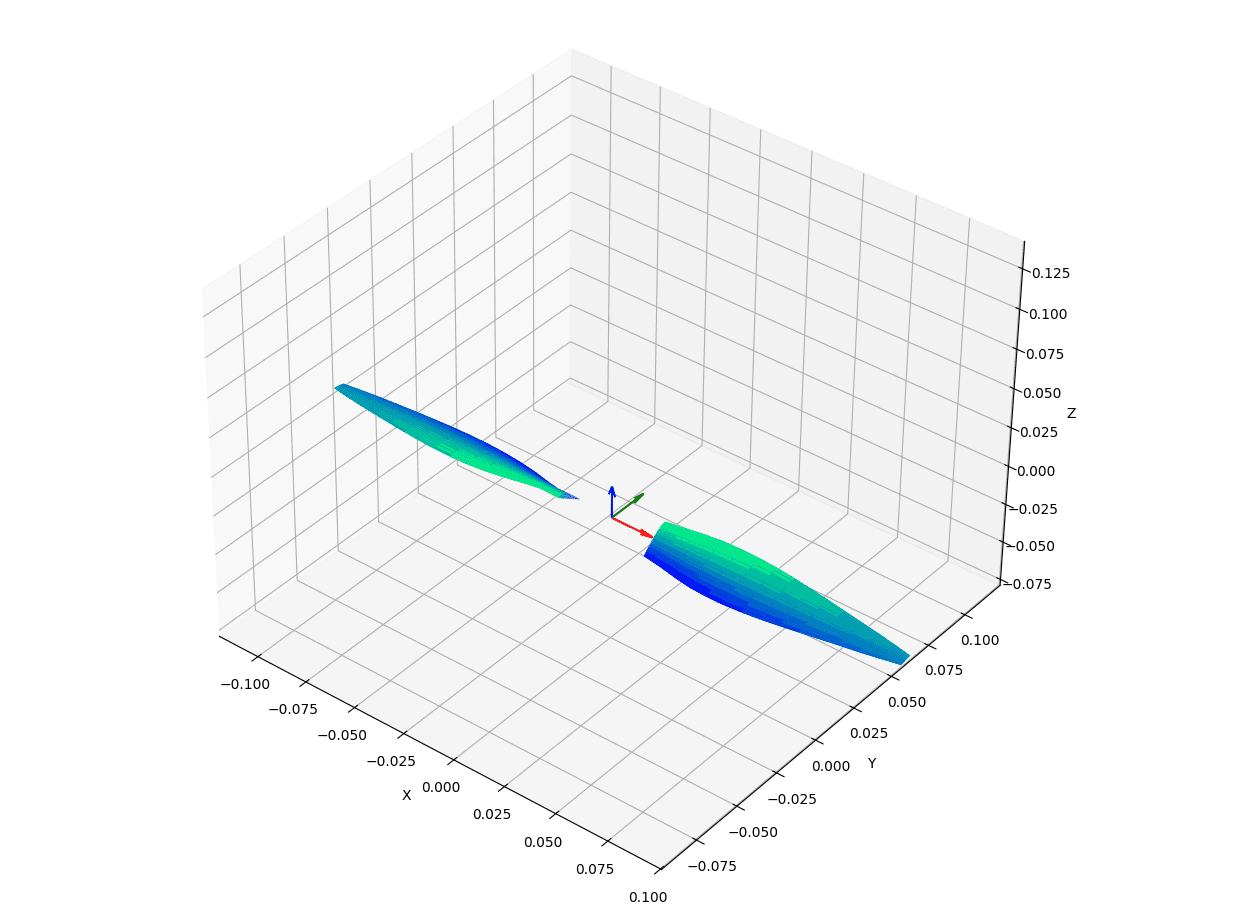
- ParametricCurve3D, ParametricSurface3D — parametric curves and surfaces with numerical normals
- Curve3D — a discrete, ordered collection of 3D points
The Power of Abstractions
Kotlin in Practice
Operator Overloading
val p1 = Point2D(1.0, 2.0)
val p2 = Point2D(3.0, 4.0)

val sum      = p1 + p2    // Point2D(4.0, 6.0)
val diff     = p2 - p1    // Point2D(2.0, 2.0)
val scaled   = p1 * 2.0   // Point2D(2.0, 4.0)
val negated = -p1 // Point2D(-1.0, -2.0)val polynomial = Polynomial(listOf(1.0, 2.0, 3.0)) // p(x) = 1 + 2x + 3x²
val y = polynomial(2.5) // evaluates p(2.5) = 23.75
val curve = BezierCurve(listOf(
Point2D(0.0, 0.0),
Point2D(0.5, 1.5),
Point2D(1.5, 1.5),
Point2D(2.0, 0.0)
))
val point = curve(0.5) // Point2D on the curve at t = 0.5
// Polynomials also support arithmetic between each other
val p3 = polynomial * Polynomial(listOf(0.0, 1.0)) // multiplication
val squared = polynomial pow 2 // (1 + 2x + 3x²)²Destructuring Declarations
// Direct coordinate extraction
val (x, y)    = Point2D(5.0, 7.0)
val (x, y, z) = Point3D(1.0, 2.0, 3.0)

// Used internally to build the affine matrix of a coordinate system
val (x1, x2) = xDirection
val (y1, y2) = yDirection
val (p1, p2) = origin

val affineMatrix = SimpleMatrix(arrayOf(
  doubleArrayOf(x1, y1, p1),
  doubleArrayOf(x2, y2, p2),
  doubleArrayOf(0.0, 0.0, 1.0)
))Extension Functions
// Extensions on List<Point2D>
val points: List<Point2D> = curve(linspace(0.0, 1.0, 100))

val xs      = points.xPoints   // extracts all x coordinates
val ys      = points.yPoints   // extracts all y coordinates
val center  = points.centroid  // mean point of the collection
val length  = points.length    // arc length

// Extension for floating-point safe equality
val equal = 0.1 + 0.2.equalsDelta(0.3) // true (delta = 1e-10)
Technologies
- Kotlin 2.x — primary language, leveraging operator overloading, destructuring and extension functions
- EJML (Efficient Java Matrix Library) — 3x3 and 4x4 affine matrix operations
- matplotlib4k — Kotlin-Python bridge for delegating rendering to matplotlib
- MkDocs — documentation hosted at geomez.com
Links
- Repository: github.com/daanrsantiago/GeomEz
- Documentation: geomez.com